
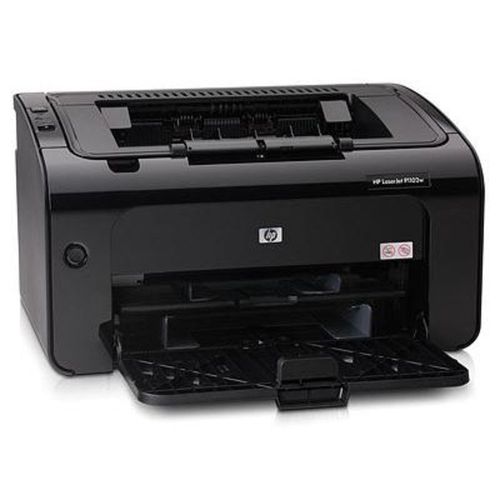
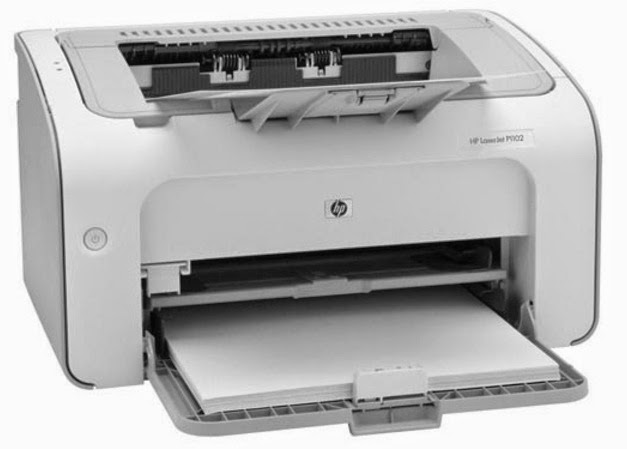
Select the LaserJet Professional P1100w from the list. Click OK to confirm your selection and add the printer, then try printing using the configured print queue. The above steps should help you print now from your HP LaserJet Pro P1102w Printer. Hope this information helps. Please feel free to. Discuss: HP LaserJet Pro P1102W (802.11g) Sign in to comment. Be respectful, keep it civil and stay on topic. We delete comments that violate our policy, which we encourage you to read. HP LaserJet Pro P1102w Printer Product #CE658A#BGJ. Produce professional-quality business prints with bold, crisp text and sharp images.Receive improved print quality with HP FastRes 1200. Shop for and purchase Original HP cartridges in just a few clicks with HP SureSupply. HP LaserJet Pro P1102w, P1109w - Wireless Printer Setup This document is for LaserJet Pro P1102w and P1109w printers. Install the print driver on a computer with Windows or Mac to set up a wireless connection on your printer.
Support Information:
| Item | Description |
| Minimum HPLIP version | 3.10.4 |
| Support level | Full (See note11.) |
| Recommended? | Yes (See note15.) |
Driver Plugin Information:
This printer REQUIRES a downloadable driver plug-in. Use hp-setup to install the printer, and to download and install the plug-in. In general, required driver plugins are required for printing support. Driver plug-ins are released under a proprietary (non-open) license and are not part of the HPLIP tarball release.


Summary of Available Features (See note10.):
| Feature | Support10 | Notes |
| Automatic installer | Depends on distro | See table below for distro specific support. |
| USB I/O | Yes | |
| Network I/O | Yes | See note1. |
| Parallel I/O | No | |
| Scan to PC | No | See note3. |
| Photo card access | No | If equiped, use USB mass storage for access. See note4. |
| PC fax send | No | See note5. |
| PC initiated copy | No | See note6. |
| Services and status | Yes | See note7. |
| Graphical user interfaces | Depends on distro | See table below for distro specific support. |
| Print head alignment | No | |
| Color calibration | No | |
| Print head cleaning | No | |
| Linefeed calibration | No | |
| Print quality diagnostics | No |
Summary of Available Features in Various Linux Distributions (see note13):
| Distro | Version | Installer | GUI14 | Scan3 | Fax5 | Status | Photo Card4 | USB | Parallel | Network1 |
| Boss | 3.0 | No | No | No | No | Yes | No | Yes | No | Yes |
| Debian | 5.0 | Yes | No | No | No | Yes | No | Yes | No | Yes |
| Debian | 5.0.1 | Yes | No | No | No | Yes | No | Yes | No | Yes |
| Debian | 5.0.2 | Yes | No | No | No | Yes | No | Yes | No | Yes |
| Debian | 5.0.3 | Yes | No | No | No | Yes | No | Yes | No | Yes |
| Debian | 5.0.4 | Yes | No | No | No | Yes | No | Yes | No | Yes |
| Debian | 5.0.5 | Yes | No | No | No | Yes | No | Yes | No | Yes |
| Debian | 5.0.6 | Yes | No | No | No | Yes | No | Yes | No | Yes |
| Debian | 5.0.7 | Yes | No | No | No | Yes | No | Yes | No | Yes |
| Debian | 5.0.8 | Yes | No | No | No | Yes | No | Yes | No | Yes |
| Debian | 6.0 | Yes | No | No | No | Yes | No | Yes | No | Yes |
| Debian | 6.0.1 | Yes | No | No | No | Yes | No | Yes | No | Yes |
| Debian | 6.0.2 | Yes | No | No | No | Yes | No | Yes | No | Yes |
| Debian | 6.0.3 | Yes | No | No | No | Yes | No | Yes | No | Yes |
| Debian | 6.0.4 | Yes | No | No | No | Yes | No | Yes | No | Yes |
| Debian | 6.0.5 | Yes | No | No | No | Yes | No | Yes | No | Yes |
| Fedora | 15 | Yes | No | No | No | Yes | No | Yes | No | Yes |
| Fedora | 16 | Yes | No | No | No | Yes | No | Yes | No | Yes |
| Fedora | 17 | Yes | No | No | No | Yes | No | Yes | No | Yes |
| gOS | 8.04.1 | No | No | No | No | Yes | No | Yes | No | Yes |
| Distro | Version | Installer | GUI14 | Scan3 | Fax5 | Status | Photo Card4 | USB | Parallel | Network1 |
| IGOS | 1.0 | No | No | No | No | Yes | No | Yes | No | Yes |
| Linux From Scratch | 6 | No | No | No | No | Yes | No | Yes | No | Yes |
| Linpus Linux | 9.4 | No | No | No | No | Yes | No | Yes | No | No |
| Linpus Linux | 9.5 | No | No | No | No | Yes | No | Yes | No | No |
| Linspire | 5.0 | No | No | No | No | Yes | No | Yes | No | Yes |
| Linux Mint | 8 | Yes | No | No | No | Yes | No | Yes | No | Yes |
| Linux Mint | 9 | Yes | No | No | No | Yes | No | Yes | No | Yes |
| Linux Mint | 10 | Yes | No | No | No | Yes | No | Yes | No | Yes |
| Linux Mint | 11 | Yes | No | No | No | Yes | No | Yes | No | Yes |
| Linux Mint | 12 | Yes | No | No | No | Yes | No | Yes | No | Yes |
| Linux Mint | 13 | Yes | No | No | No | Yes | No | Yes | No | Yes |
| Mandriva Linux | 2010.0 | No | No | No | No | Yes | No | Yes | No | Yes |
| Mandriva Linux | 2011.0 | No | No | No | No | Yes | No | Yes | No | Yes |
| Mepis | 6.0 | No | No | No | No | Yes | No | Yes | No | Yes |
| Mepis | 6.5 | No | No | No | No | Yes | No | Yes | No | Yes |
| Mepis | 7.0 | No | No | No | No | Yes | No | Yes | No | Yes |
| Mepis | 8.0 | No | No | No | No | Yes | No | Yes | No | Yes |
| PCLinuxOS | 2006.0 | No | No | No | No | Yes | No | Yes | No | Yes |
| PCLinuxOS | 2006 | No | No | No | No | Yes | No | Yes | No | Yes |
| PCLinuxOS | 2007.0 | No | No | No | No | Yes | No | Yes | No | Yes |
| Distro | Version | Installer | GUI14 | Scan3 | Fax5 | Status | Photo Card4 | USB | Parallel | Network1 |
| PCLinuxOS | 2007 | No | No | No | No | Yes | No | Yes | No | Yes |
| PCLinuxOS | 2008.0 | No | No | No | No | Yes | No | Yes | No | Yes |
| PCLinuxOS | 2008 | No | No | No | No | Yes | No | Yes | No | Yes |
| PCLinuxOS | 2009.0 | No | No | No | No | Yes | No | Yes | No | Yes |
| PCLinuxOS | 2009 | No | No | No | No | Yes | No | Yes | No | Yes |
| Red Hat | 8.0 | No | No | No | No | Yes | No | Yes | No | Yes |
| Red Hat | 9.0 | No | No | No | No | Yes | No | Yes | No | Yes |
| Red Hat Enterprise Linux | 5.0 | No | No | No | No | Yes | No | Yes | No | Yes |
| Red Hat Enterprise Linux | 5.1 | No | No | No | No | Yes | No | Yes | No | Yes |
| Red Hat Enterprise Linux | 5.2 | No | No | No | No | Yes | No | Yes | No | Yes |
| Red Hat Enterprise Linux | 5.3 | No | No | No | No | Yes | No | Yes | No | Yes |
| Red Hat Enterprise Linux | 5.4 | No | No | No | No | Yes | No | Yes | No | Yes |
| Red Hat Enterprise Linux | 5.5 | No | No | No | No | Yes | No | Yes | No | Yes |
| Red Hat Enterprise Linux | 5.6 | No | No | No | No | Yes | No | Yes | No | Yes |
| Red Hat Enterprise Linux | 5.7 | No | No | No | No | Yes | No | Yes | No | Yes |
| Red Hat Enterprise Linux | 5.8 | No | No | No | No | Yes | No | Yes | No | Yes |
| Red Hat Enterprise Linux | 6.0 | No | No | No | No | Yes | No | Yes | No | Yes |
| Slackware Linux | 9.0 | No | No | No | No | Yes | No | No | No | No |
| Slackware Linux | 9.1 | No | No | No | No | Yes | No | No | No | No |
| Slackware Linux | 10.0 | No | No | No | No | Yes | No | No | No | No |
| Distro | Version | Installer | GUI14 | Scan3 | Fax5 | Status | Photo Card4 | USB | Parallel | Network1 |
| Slackware Linux | 10.1 | No | No | No | No | Yes | No | No | No | No |
| Slackware Linux | 10.2 | No | No | No | No | Yes | No | No | No | No |
| Slackware Linux | 11 | No | No | No | No | Yes | No | No | No | No |
| Slackware Linux | 12 | No | No | No | No | Yes | No | No | No | No |
| Slackware Linux | 12.1 | No | No | No | No | Yes | No | No | No | No |
| SUSE Linux | 11.4 | Yes | No | No | No | Yes | No | Yes | No | Yes |
| SUSE Linux | 12.1 | Yes | No | No | No | Yes | No | Yes | No | Yes |
| Ubuntu | 8.04 | Yes | No | No | No | Yes | No | Yes | No | Yes |
| Ubuntu | 10.04 | Yes | No | No | No | Yes | No | Yes | No | Yes |
| Ubuntu | 10.10 | Yes | No | No | No | Yes | No | Yes | No | Yes |
| Ubuntu | 11.04 | Yes | No | No | No | Yes | No | Yes | No | Yes |
| Ubuntu | 11.10 | Yes | No | No | No | Yes | No | Yes | No | Yes |
| Ubuntu | 12.04 | Yes | No | No | No | Yes | No | Yes | No | Yes |
Other Information:
| Item | Description | Notes |
| Driver plug-in | Required | See note8. |
| Requires firmware download | No | |
| APDK device class(es): | LJZjsMono | |
| HPLIP device sub-class(es): | NoAutoDuplex | |
| USB VID:PID | 1008:810 | |
| Embedded web server | No | |
| HPLIP job storage | No | |
| models.dat name | hp_laserjet_professional_p1102w |
Hp Laserjet P1102w Installation
All information provided is believed to be accurate but is not guaranteed.
Notes:
1 Network support indicates built-in ethernet and/or wireless networking. Alternatively, many devices may be operated on the network using an external JetDirect print server. Not all network configurations are supported. Please refer to the HPLIP FAQs for more information.
2 USB mass storage only. You may mount the photocard as a storage drive over USB only. Refer to your distribution's documentation for setup and usage instructions.
Hp Laserjet Professional P1102w Mac Wireless Setup
3 Scan supported means that PC initiated scan using a SANE compatible software application is supported over parallel, USB, or network (depending on I/O connection). Information on digital sending products is covered in note 9, below.
4 Photo supported means that the printer's photo card slots are readable using either USB mass storage (USB only) or hp-unload (USB, parallel or network).
5 Fax supported means that PC initiated fax send is supported using hp-sendfax, once an appropriate CUPS fax queue is set up. Fax support varies on Linux distributions, based on the availability of python-dbus version 0.80 or greater (versions before 0.80 will not work with HPLIP). Click on the model name of each printer to get more detailed information.
6 Copy supported means that PC initiated copying is supported using hp-makecopies.
7 'Services and status' means that ink/toner levels, error reporting, and services such as alignment, and color calibration are available (via the HP Device Manager aka Toolbox).
8 ('Required') A downloadable driver plug-in is required for printing support. ('Optional') A downloadable driver plug-in is optional for printing support and may increase the speed, quality, or other aspect of printed output. ('No' or 'None') A driver plug-in is not required nor available. Driver plug-ins are released under a proprietary (non-open) license and are not part of the HPLIP tarball release. For more information, please refer to this KB article
9 Device supports digital sending, not standard scanning protocols. See this KB article for more info.
10 Feature support depends on the specific Linux distribution being used.
11 For a definition of Support Levels, please refer to this KB article.
12 For more information, please refer to this KB article.
13 The 'Summary of Available Features in Various Linux Distributions' table lists available features for distros that are supported by the HPLIP automatic tarball installer. Distros that are not listed will require a manual install procedure (See this page for more information).
14'Qt3' and 'Qt4' refer to the supported UI toolkit. If 'Qt3' is indicated, then the distro supports a GUI interface using the Qt3 UI toolkit. The Qt4 toolkit is not supported for the distro in this case. If 'Qt4' is indicated, then the distro supports a GUI interface using the Qt4 UI toolkit. In this case, the Qt3 UI toolkit may also be available and used if desired. The appropriate UI toolkit will be automatically installed by the HPLIP installer.
15'Recommended' means that the printer is fully supported in HPLIP and is recommended for use on your Linux system. For information of what 'fully supported' means, see this KB article.
I got an HP LaserJet P1102w about a year ago, so long before I thought I was going to get an Apple’s iOS device. I purchased it just because I thought it would be useful to have a printer that could work wirelessly.
At that time I made it work using wireless, but for some reason it stopped working. I didn’t care because it was very simple to connect it via USB to my computer and get my stuff done.

However, this time’s story was different. I really wanted it to work wirelessly to be able to print from an iPad. And after so many hours I made it work. The main problem was that the printer could not get an IP address when WEP was enabled.
In few steps: I disabled WEP on my router, connected my printer using DHCP, assigned it a static IP and then enabled WEP again.
So, here is what I did:
Important: The following instructions assume you have some technical knowledge. There are many terms and actions that you must be familiar with.
- First, remove all your printer’s drivers and disconnect it from your computer. You can get detailed instructions on this page.
- Restart your computer.
- Connect to your router’s administrative page and temporarly disable WEP or any other authentication.
- On Windows: connect the printer to your computer. A new drive will show up on Windows Explorer. Double click the SISetup.exe file located in the new drive to start the installation.
On Mac: Download the latest printer drivers from HP.com. Start the installation from the downloaded files. - When the installation program asks you to select a method to connect to your printer choose via WiFi Network. You can do this even if your computer is connected via Ethernet to your router.
- When you are prompted to select a method for detecting your WiFi network select Automatic.
- Select your router from the list. Since you disabled WEP before, the installation program will not ask you for a password.
- Unplug your USB cable when asked for.
- After some minutes, your printer installation will finish. At this point your printer should be connected to your router.
- Get your printer’s IP address. You can do it by pressing for about 5 seconds the X button on it.
Now, to set your router’s security on again:
- Open a web browser and go to your printer’s IP address.
- Go to Network Connections and set your IP address as Manual IP. I strongly recommend you to leave the DHCP assigned IP address as the new static one; this way you will not loose connectivity when you apply the changes.
- Now, still on your printer’s web page, click on Wireless. On security mode select WEP, then select Hexadecimal and under WEP Key 1 type what your new WEP key will be.
- Apply the changes. At this moment you will loose connectivity to your printer because it will try to connect to your router using WEP.
- Go back to your router’s administrative web page and turn WEP authentication on again. Assign the aforementioned WEP key.
- Apply the changes.
- Turn your printer off and on and connectivity must be recovered.
- You are now ready to connect to it using any iOS device.
Final suggestions
- Update your printer’s firmware. You can download the latest version from HP.com.
- Instruct your router not to reassign the IP address your printer uses.